

Production Of FERRO MOLYBDENUM
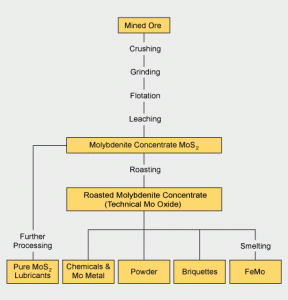
The most basic definition of the FerroMolybdenum production process would be that the Molybdenum is first mined and then transformed into Molybdenum Oxide MoO3. That oxide is mixed with iron oxide and aluminum and then reduced in an aluminothermy reaction. Electron-beam melting then purifies the Ferro Molybdenum, or the product can be packaged as-is. Typically the resulting alloy will be produced as either small briquettes or as a finer powder. Ferro Molybdenum is usually supplied in either bags or steel drums for shipping.
Molybdenum, element number 42 of the periodic table, lies in the table’s second transition series, in Group 6B between chromium and tungsten. Molybdenum (Mo) is a silvery grey chemical element that is not found in a pure state in nature but as molybdenite. Molybdenite can be found in the different Earth layers combined with other elements, mainly copper. Given its durability and resistance to high temperatures and corrosion, molybdenum is widely used in high-quality steel alloys required for the metallurgic, chemical, and steel industries.
It has one of the highest melting temperatures of all the elements, yet unlike most other high-melting-point metals, its density is only 25% greater than irons. Its coefficient of thermal expansion is the lowest of the engineering materials, while its thermal conductivity exceeds all but a handful of elements.
When added to steel and cast irons, molybdenum enhances strength, hardening ability, weldability, toughness, elevated temperature strength, and corrosion resistance. In nickel-base alloys, it improves resistance to both corrosion and high-temperature creep deformation.
Molybdenum-based alloys have unique properties, including high strength at elevated temperatures, high thermal and electrical conductivity, and low thermal expansion. Molybdenum metal and its alloys are the first choices in many demanding specialized applications.
FERRO MOLYBDENUM (FeMo)
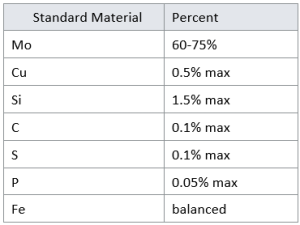
Ferro Molybdenum is an alloy that is formed by combining iron and Molybdenum. Ferro Molybdenum is a hardening agent and is found in many heat-treatable alloy plates of steel. Molybdenum prevents corrosion in stainless steels, and when mixed with iron, the Molybdenum also strengthens and hardens into austenite. Ferro Molybdenum comes in many grades, although predominantly it is produced in just two grades where the content of pure Molybdenum is between 60% and 75%.
Properties Of FERRO MOLYBDENUM
Ferro Molybdenum is additive to the production process of amorphous metals and will impart several desirable properties to the new alloy. One of the primary benefits of adding Ferro Molybdenum to an alloy is its hardening properties which makes steel extremely strong and at the same time weldable, as Molybdenum is one of the top 5 melting-point metals. Additionally, adding Ferro Molybdenum to an alloy can increase corrosion resistance. The properties of Ferro Molybdenum make it suitable for a variety of protective films over other metals.
Uses Of FERRO MOLYBDENUM
The largest practical applications of Ferro Molybdenum are its use in ferrous alloys, and depending on the molybdenum content range, it is suited for machine tools and equipment, military hardware, refinery tubing, load-bearing parts, and rotary drills. Ferro Molybdenum is also used in cars, trucks, locomotives, and ships. In addition, Ferro Molybdenum is used in stainless and heat-resisting steels that are employed by synthetic fuel and chemical plants, heat exchangers, power generators, oil-refining equipment, pumps, turbine tubing, ship propellers, plastics, and inside acid storage containers. Tool steels, with a high percentage range of Ferro Molybdenum, are used in high-speed machining parts, cold work tools, drill bits, screwdrivers, dies, chisels, heavy castings, ball and rolling mills, rolls, cylinder blocks, piston rings, and large drill bits.
Chemical Analysis
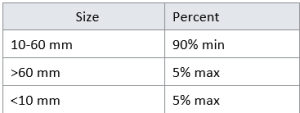
size:
reference: